Key facts at a glance
- Feeling overwhelmed usually builds up gradually, from many pressures at once. It is not a weakness, but an understandable reaction to demands that stay high for a long time.
- Warning signs include ongoing exhaustion, decisions you keep putting off and the feeling that even small tasks are too much.
- Psychosocial coaching helps you sort out what is weighing on you and make everyday life manageable again. It is not therapy and it does not make diagnoses.
- If you receive basic income support (Grundsicherung, formerly Bürgergeld) and are able to work, the Job Center (Jobcenter) can cover the coaching under Section 16k SGB II.
Between keeping things running and inner exhaustion
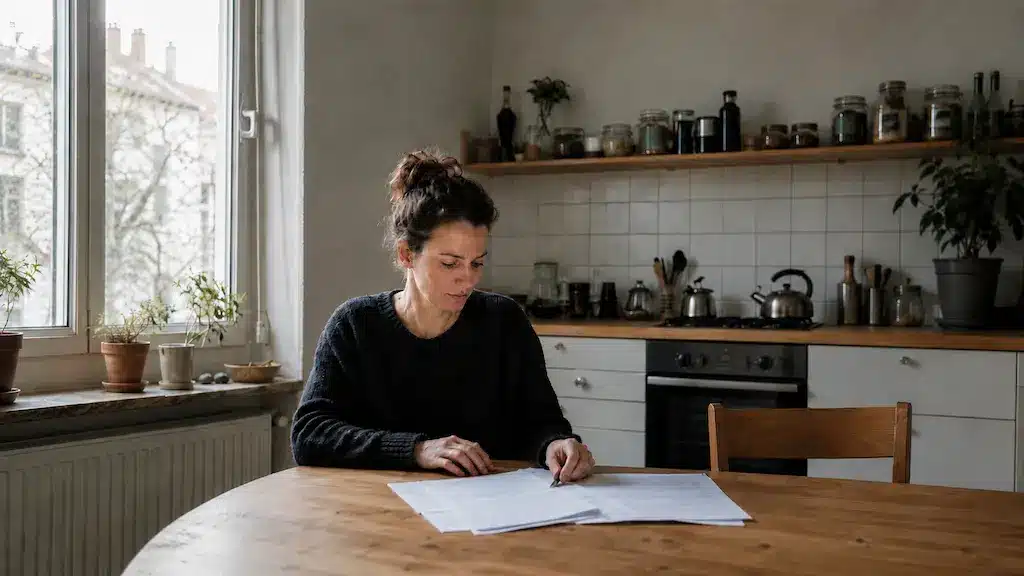
Imagine you wake up in the morning, tired even though you slept. You know what needs doing, but just thinking about it drains your energy. Decisions are hard, small things suddenly seem huge. Everyday life somehow carries on, but you can barely keep up.
Everything is too much.
But nothing can be dropped.
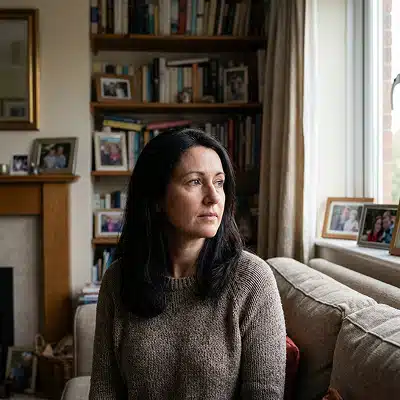
This kind of emotional exhaustion and mental overload is not a weakness. It is often an understandable reaction to demands that stay high, missing breaks and the feeling that you always have to function.
Psychosocial coaching can support you at exactly this point. Not with quick fixes, but with structured support to rebuild clarity, inner stability and your ability to act in everyday life.
Why feeling overwhelmed has become so common
Feeling overwhelmed rarely happens suddenly. It is usually the result of many small pressures that have built up over months or years. Work, family, responsibility, money worries and other people’s expectations all weigh on you at the same time.
On top of that, many people ignore warning signs for a long time. Tiredness, inner restlessness or withdrawal are treated as normal, breaks are postponed, personal limits ignored. Instead of pausing, people keep going, often because they feel they have no alternative.
That is why feeling overwhelmed is not a personal failure. It is often a logical reaction to demands that stay high without enough relief or support.

How to tell when feeling overwhelmed is becoming a problem
Feeling overwhelmed doesn’t always show clearly. It often develops gradually and so goes unrecognised for a long time.
Many people describe their situation like this, for example:
- You feel exhausted all the time, physically and emotionally.
- You find decisions hard or put them off.
- Even small tasks suddenly feel overwhelming.
- You withdraw or get irritated more quickly.
- You lose touch with your own needs.
Good to know: If the strain no longer eases on its own but affects your everyday life for a long time, it can make sense to accept support. Not as a last resort, but as a conscious step towards regaining stability.
How psychosocial support in coaching actually helps
Psychosocial coaching offers a protected setting where you can make sense of what is weighing on you and rebuild inner stability. It is not about judging problems or making diagnoses. It is about finding direction and widening your options.
Sorting things out inside
When thoughts, feelings and demands all press on you at once, it becomes hard to see clearly. In coaching, you sort through the pressures together: What comes from outside? What comes from inner drivers, old patterns or unresolved conflicts? This clarity alone can already be a relief.
Building stability before looking for solutions
Before changes can take hold, you need a sense of inner security. That is why psychosocial coaching doesn’t start with goal plans or to-do lists, but with the question of what gives you something to hold on to and makes everyday life manageable again.
Making resources visible and strengthening them
Many personal strengths are not lost in difficult phases. They just fade into the background. In coaching, these resources become accessible again: skills, experience, supportive relationships or strategies that have worked before.
Making everyday life manageable again
You don’t have to solve everything at once. Coaching helps you clarify priorities, break the overload down into small steps and regain control over your everyday life. Not perfect, but liveable.
Many people find it helpful to know that psychosocial coaching is funded under Section 16k SGB II. It is a form of holistic support (ganzheitliche Betreuung) for people who are able to work and entitled to benefits (recipients of basic income support). The aim is to remove existing obstacles and strengthen employability. It is meant for people in difficult life situations who need support to find stability and direction again.
Good to know: Section 16k SGB II makes holistic support possible for recipients of basic income support who are able to work. The aim is to reduce personal, social or health-related strains that stand in the way of taking up work.

In concrete terms, this means:
– one-on-one coaching tailored to you
– support with daily structure, dealing with authorities or crisis situations
– stabilisation and developing prospects with a view to starting or returning to work

The funding comes from the Job Center and is free of charge for participants.
How psychosocial coaching makes everyday life easier
Many people hope that the strain will simply disappear if they just hold out long enough. In practice, the opposite often happens. Without a change in how you deal with stress and inner pressure, everyday life stays exhausting and hard to keep track of.
This is where psychosocial coaching comes in. It helps you bring structure back into everyday life, set priorities and make decisions at a pace that matches how much you can take on.
Stability doesn’t show up as sudden ease. It shows up as a growing sense of control, confidence in your own ability to act and inner order. That is a foundation for new prospects, without losing yourself along the way.
Who can use psychosocial coaching
Psychosocial coaching is for people who are going through a challenging phase of life and notice that they can’t move forward on their own. Often it is not a single event, but a longer period of ongoing strain.
Coaching can be particularly helpful when the overload can no longer be tied to one area of life: when demands at work, responsibilities at home and your own expectations of yourself are intertwined and keep draining your energy.
Many people are in a phase of career upheaval, coming out of a long period of overload or reorienting themselves personally. They include parents or carers with a heavy mental load, people after illness or exhaustion, and people who function on the outside but no longer feel stable inside.
Important: To receive psychosocial coaching under Section 16k SGB II, you need to be able to work and receive benefits under SGB II (basic income support).
How to take the first step
For many people, the first step towards support feels unfamiliar. There are often doubts about whether their own strain is “enough” or whether they will have to explain themselves.
An initial consultation in psychosocial coaching is first of all about arriving. It is about understanding your situation, answering your questions and checking together whether this kind of support suits you. You don’t have to prepare anything, prove anything or bring finished goals.
Pace, content and focus depend on how much you can take on and on your everyday life, not on fixed programmes or other people’s expectations. Psychosocial coaching can take place online or in person, whichever suits you.
Stability doesn’t happen overnight, but it is possible
Feeling overwhelmed rarely goes away on its own. But it doesn’t have to stay that way. With the right support, structures can grow, inner order can develop and new prospects can come into view.
Psychosocial coaching is not a quick way out, but a process in which someone accompanies you. One that builds stability and keeps the way ahead open.
At Good Prospects we support people in exactly these phases: calmly, professionally and with the understanding that stability is the first step towards shaping your own path consciously again.
Stability develops step by step. When a lot feels hard at the same time, accepting support is not a sign of weakness. It is a sensible way to find direction and inner order again.
Frequently asked questions about psychosocial coaching
Is psychosocial coaching therapy?
No. Psychosocial coaching does not replace psychotherapy and does not make diagnoses. It is for people who need support, direction and stability in everyday life.
Who can use psychosocial coaching under Section 16k SGB II?
It is aimed at people entitled to benefits under SGB II (recipients of basic income support) who are able to work but need support to reduce existing personal, social or health-related strains and to prepare their way back into work.
Do I have to be unemployed to receive psychosocial coaching?
Yes. Psychosocial coaching under Section 16k SGB II is for people who receive benefits under SGB II (basic income support). The aim is to improve the conditions for starting or returning to work.
How is psychosocial coaching different from classic job coaching?
Job coaching focuses on applications and the job market. In psychosocial coaching, the focus is on you as a person.
Does psychosocial coaching cost me anything?
If it is approved, the costs are usually covered in full by the Job Center under Section 16k SGB II.
How long does psychosocial coaching take?
The duration depends on your individual situation and is adjusted flexibly.
Final tip: Today, write down what is costing you the most energy right now and split it into two columns: What comes from outside, and what comes from your own expectations of yourself? Just sorting it like this can be a relief.